
Snapper Fishing Port Phillip Bay (Melbourne): Jayson’s Straight-Up Guide | Pro Red Fishing Charters
AustraliaBoat CharterVictoriaFishing CharterFishingMelbourneChasing Melbourne snapper in Port Phillip Bay? Jayson from Pro Red Fishing Charters breaks down the seasonal run, tides, bait, rigs, and bite windows—plus snapper trips from $200pp. Contact Pro Red via MatesBoat.
Table of Contents
- Why snapper are such a respected target (growth rate + lifespan)
- The snapper migration circuits around Melbourne
- Breeding and spawning cycles (when things go nuts)
- Habitat + feeding habits (how snapper actually behave)
- A straight-up approach to snapper in Port Phillip Bay (what I focus on)
- Western Port snapper: the tide-first game plan
- What a Pro Red Fishing Charters trip looks like (the charter experience)
- Pricing (snapper trips)
- Book Pro Red Fishing Charters
- FAQ — snapper fishing in Port Phillip Bay (Melbourne)
Guide to snapper fishing in Port Phillip Bay (Melbourne) — by Jayson from Pro Red Fishing Charters
If you’re chasing that proper Melbourne “Big Red”, snapper season in Port Phillip Bay and Western Port is hard to beat — but it’s also the time of year where a little knowledge makes a massive difference.
I’m Jayson from Pro Red Fishing Charters, and this is a straight-up guide to what snapper do around Melbourne’s Port Phillip Bay and Western Port during our prime snapper window — plus how we approach it on charter so you can stack the odds in your favour.
Note: This guide is written from my on-water experience and observations running Pro Red Fishing Charters.
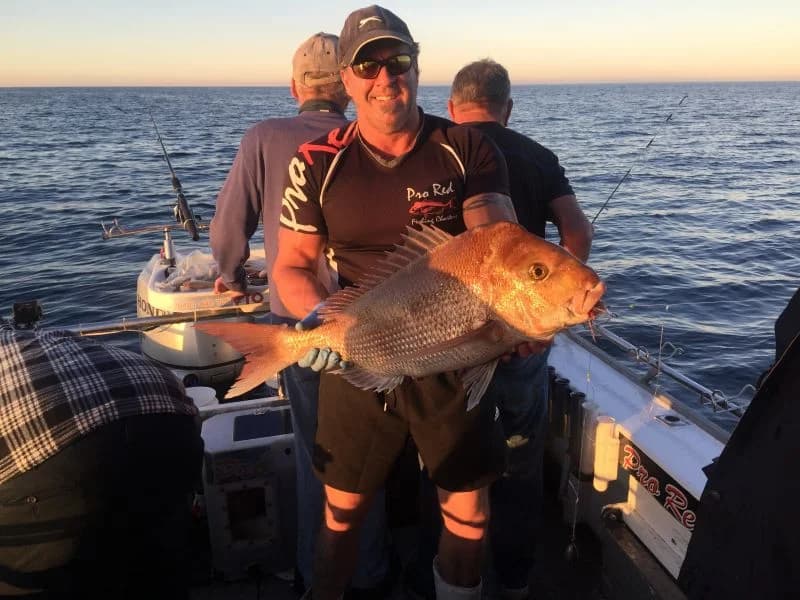
Why snapper are such a respected target (growth rate + lifespan)
One of the reasons snapper are so prized is you’re often targeting fish that have been around for decades.
Juvenile phase (fast growth): Snapper growth is quickest in the first few years. They typically reach the minimum legal length of 28 cm in about 3–4 years.
After maturity (slow growth): Once they’re mature, growth slows right down to around 1–2 cm per year.
Longevity: A genuine “Big Red” (80 cm+) can be 20–30 years old, and some fish can live up to 40 years.
That’s why we treat these fish with respect — and why learning the seasonal movement matters.
The snapper migration circuits around Melbourne
Snapper in Melbourne follow pretty distinct annual patterns across the two main systems: Port Phillip Bay and Western Port.
Port Phillip Bay patterns
The arrival: As Bass Strait warms to roughly 13°C in September, mature snapper push through The Heads and start showing in key areas like Carrum Bight and Hobsons Bay.
The departure: Once water temps climb past about 19°C (late December), many adult fish disperse — either moving into deeper water or heading back out to Bass Strait.
What that means in plain English: early season is often about being ready for the first push, and late season can turn into a “find them or miss them” game.
Western Port movements (it’s a different beast)
Western Port isn’t a big open bowl like Port Phillip — it’s all about deep channels and tidal flow.
The channel run: Snapper often work along the North Arm and Western Entrance, around areas like Stony Point and Hastings.
Tidal influence: The tide is everything here. Snapper use it like a conveyor belt:
On the flood tide, they’ll push up onto mudflats and mangroves to feed.
On the ebb tide, they’ll drop back into the deeper 20 m “holes” to rest.
If you’re new to Western Port, the biggest mistake is fishing it like Port Phillip. In Western Port, you’re fishing the tide first — and the spot second.
Breeding and spawning cycles (when things go nuts)
Port Phillip Bay is a major spawning ground for the region, and the peak period is when you’ll often see the biggest concentrations.
Spawning peak: Generally November to January.
Broadcast spawners: Snapper release eggs and sperm into the water column at the same time.
Fecundity: A single female can release up to 800,000 eggs per spawning event.
Aggregations: This is when your sounder can light up with those classic vertical stacks of schooling fish.
During the spawn run, you can have days where it feels like the whole bay is alive — and days where they’re there, but they won’t open their mouths. That’s snapper fishing.
Habitat + feeding habits (how snapper actually behave)
Snapper are opportunistic, powerful bottom feeders — but they’re not just vacuuming the mud all day.
Primary habitats: They favour reefs and mudflats. In Western Port, they’re often tight to the steep edges of channel banks.
Diet: They’ll graze the seabed, but they also hunt in the water column for bait like silver whiting, squid, and pilchards.
Feeding triggers (Western Port bite windows): In heavy current, the bite can be short and sharp. Often the best window is the hour around the tide change, when current slows enough for fish to forage comfortably.
If you’ve ever heard someone say, “They only bit for 20 minutes,” that’s not an excuse — that can genuinely be the bite.
A straight-up approach to snapper in Port Phillip Bay (what I focus on)
Here’s the practical way I think about Port Phillip snapper fishing, especially for people who want consistent results.
1) Time the season, but don’t worship a calendar
Yes, snapper show up as the water warms — but conditions matter more than dates.
Early season: watch for that ~13°C warming trend.
Peak: Nov–Jan is prime for aggregations.
Late: once it’s pushing 19°C+, expect more movement and less predictability.
2) Fish where snapper want to travel and feed
Snapper are moving with purpose — they’re not randomly scattered.
In Port Phillip, that often means setting up where fish can move between deeper water and feeding areas, and where bait is present.
3) Keep bait and rigs simple, but do them properly
You don’t need to reinvent the wheel. You need good bait, presented cleanly.
Fresh baits we commonly use include silver whiting, pilchards, and squid.
Rig styles that work well:
Twin-hook snelled rigs
Snapper Snatchers
The key is matching bait size to hook size, keeping hooks proud, and fishing gear that’s balanced enough to feel the bite but strong enough to turn a good fish.
Western Port snapper: the tide-first game plan
If you’re fishing Western Port, here’s the mindset shift:
Pick a plan around the tide change.
Expect snapper to move with the current — up to feed, back to the holes to rest.
Be ready for short bite windows.
If you’re not confident reading the tide and setting up safely and effectively, that’s where a charter can save you a lot of trial and error.
What a Pro Red Fishing Charters trip looks like (the charter experience)
On a Pro Red trip, we’re not guessing — we’re hunting.
We use Simrad and Lowrance electronics to locate schools and track how fish are sitting in the water column. Once we find them, we’ll set you up with the right approach for the conditions.
Typical snapper setups we run:
Twin-hook snelled rigs or Snapper Snatchers
Fresh baits like silver whiting, pilchards, or squid
The goal is simple: get you on fish, keep it relaxed, and help you learn what’s happening — so even if you’re new, you’re not just holding a rod… you’re actually fishing.
Pricing (snapper trips)
Snapper fishing trips with Pro Red Fishing Charters start from $200 per person.
For current availability, inclusions, and the best trip option for your group, the fastest move is to reach out via MatesBoat.
Book Pro Red Fishing Charters
If you want a the best chance at catching snapper in Port Phillip Bay (Melbourne) with a crew that knows the seasonal movement and how to fish the bite windows, contact Pro Red Fishing Charters via MatesBoat.
Contact Pro Red Fishing Charters on MatesBoat: [MATESBOAT_SUPPLIER_LINK_PLACEHOLDER]
See Pro Red Fishing Charters reviews on MatesBoat: [MATESBOAT_REVIEWS_LINK_PLACEHOLDER]
FAQ — snapper fishing in Port Phillip Bay (Melbourne)
When does snapper season start in Port Phillip Bay?
Snapper typically begin arriving as Bass Strait warms to around 13°C, often from September. The exact timing can shift year to year depending on conditions.
When is the peak snapper run in Melbourne?
The peak spawning period is generally November to January, and that’s when you can see big aggregations and strong fishing — alongside days where they can be shut down.
When do snapper leave Port Phillip Bay?
Once temperatures rise above roughly 19°C (late December), many adult snapper disperse into deeper water or head back out toward Bass Strait.
What’s the minimum legal size for snapper in Victoria?
In this guide, I reference snapper reaching 28 cm in about 3–4 years. Always check the latest Victorian fishing regulations before you fish.
How old is a big snapper?
A snapper around 80 cm+ can be 20–30 years old, and some fish can live up to 40 years.
What bait is best for snapper in Port Phillip Bay?
Common effective baits include silver whiting, pilchards, and squid. Fresh bait and clean presentation matter a lot.
What rigs do you use on Pro Red snapper trips?
We commonly use twin-hook snelled rigs and Snapper Snatchers, matched to the bait and conditions.
Is Western Port the same as Port Phillip for snapper?
Not really. Western Port is tide-driven with deep channels and strong current. Snapper movement there often follows the tide like a conveyor belt, and bite windows can be short around tide changes.
How much does a snapper charter cost with Pro Red Fishing Charters?
Snapper trips start from $200 per person. For exact trip options and availability, contact us via MatesBoat.
What’s the best way to contact Pro Red Fishing Charters?
Use MatesBoat so everything’s in one place.
Contact Pro Red Fishing Charters via MatesBoat: [MATESBOAT_SUPPLIER_LINK_PLACEHOLDER]
Enquiry form placeholder: [MATESBOAT_ENQUIRY_LINK_PLACEHOLDER]
Cheers, and I hope this gives you a few insights.